When Siding Damage May Call for More Than Another Patch
Siding needs replacement when damage is widespread, keeps returning, or points to moisture or structural problems behind the panels. HomeRemodelNorthbend.info checks the siding and underlying wall before recommending a patch, repair, or replacement.
Request an EstimateWhen Does Siding Damage Need More Than a Patch?
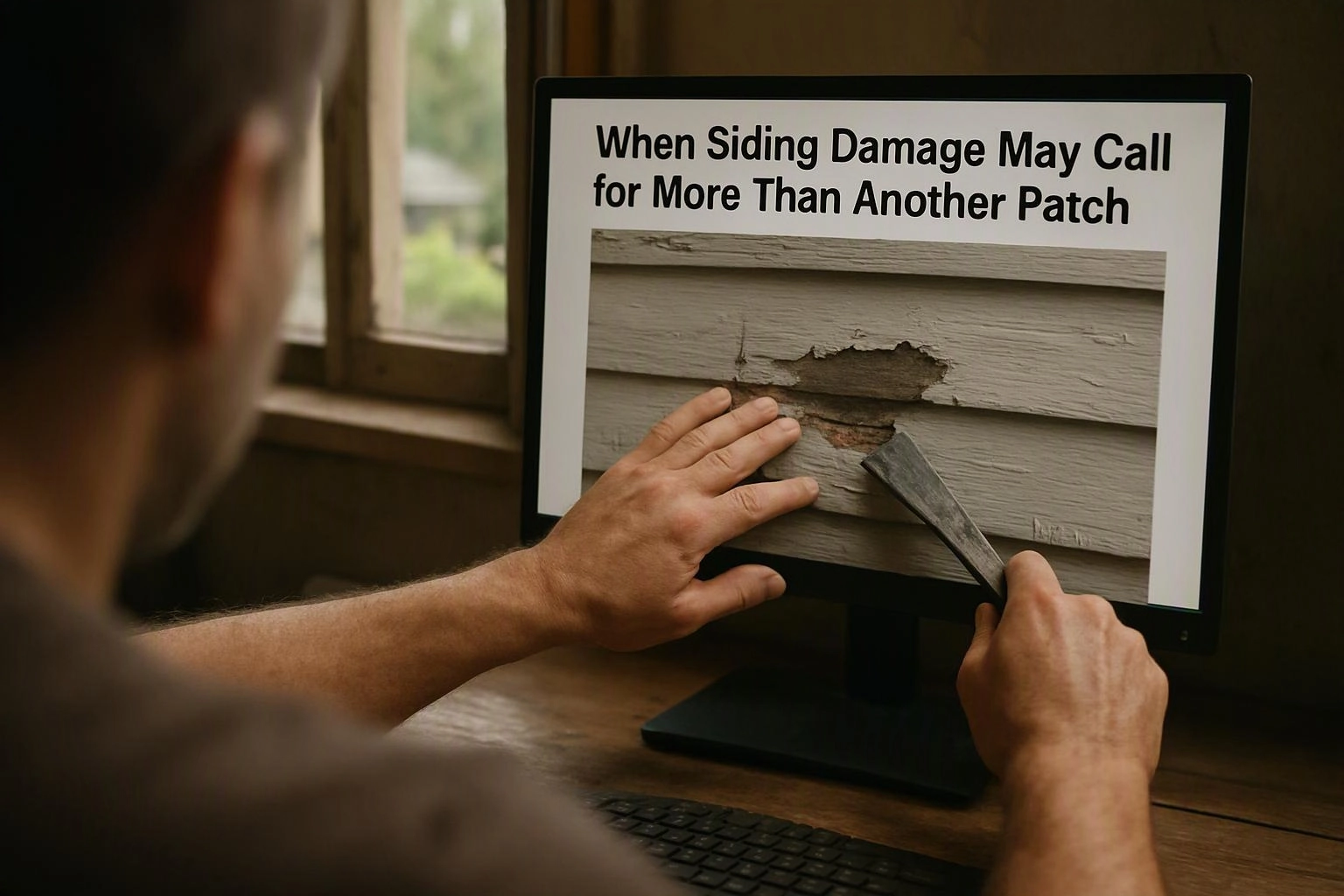
Siding damage needs more than a patch when the damage is widespread, returns after repair, or affects the layers behind the siding.
A siding patch can work for isolated surface damage. Replacement becomes the safer choice when cracked or warped siding appears across several areas. Moisture damage can also reach wall sheathing, housewrap, and framing behind the visible panels.
We inspect the visible damage and trace likely water paths before choosing a repair scope. Our team may recommend siding replacement when a patch would only cover hidden damage.
For broader planning, our Siding Installation service includes attention to the layers that protect the building envelope.
Patch or Replace? A Quick Siding Damage Comparison
A patch fits isolated surface damage, while replacement fits repeated, widespread, or moisture-related damage.
The right choice depends on the siding condition and the source of the failure. We use the comparison below as a starting point, then inspect the wall in person.
| Condition | Likely direction | Reason |
|---|---|---|
| Localized damage | Patch or siding repair | The affected area is contained. |
| Repeated damage | Replacement review | The original cause may still be active. |
| Warped siding | Inspection before repair | Movement may involve moisture or fasteners. |
| Cracked siding | Patch or section replacement | The repair depends on spread and cause. |
| Moisture intrusion | Siding replacement review | Hidden layers may need repair. |
Patching Over Rotten or Soft Siding
Soft siding often signals wood rot or moisture intrusion beneath the surface.
A patch can hide the weak area, but it won't restore damaged material. We remove affected replacement siding and check the supporting layers before closing the wall.
The work scope can grow when wall sheathing or framing also needs attention. We explain each repair area before starting the replacement.
Ignoring Cracks That Keep Spreading
Siding cracks need attention when they spread beyond one impact point or allow water entry.
Impact damage can start a crack, while expansion and contraction can make it larger. We check the panel edges, nearby joints, and the wall behind the opening.
A small repair may suit stable damage. Replacement becomes more practical when repeated cracks show that the panel or installation no longer protects the wall.
Treating Warped Siding as a Cosmetic Issue
Warped siding can indicate buckling, loose fasteners, installation movement, or wall moisture.
Appearance alone doesn't show which condition is present. We inspect the panel movement and surrounding joints before choosing a repair.
Correcting only the visible bow can leave the cause in place. The final scope may include panel work, fastener correction, moisture control, or replacement of damaged layers.
Painting Over Peeling or Swollen Siding
Peeling paint and swollen siding can point to trapped moisture below the surface coating.
Paint may cover discoloration for a short time, but it cannot strengthen swollen material. We look for water entry and soft spots before applying any new finish.
The repair scope depends on whether the problem stays at the surface or reaches the siding and wall layers. We replace damaged sections when the material no longer holds its shape.
Replacing Panels Without Checking Behind Them
Wall sheathing supports the exterior wall and can suffer moisture damage behind failed siding.
Housewrap and flashing help direct water away from the wall. We inspect those layers when visible damage suggests a longer water path.
Replacing panels without checking behind them can leave structural repairs unfinished. Our team includes the needed sheathing, housewrap, flashing, or trim work in the repair scope.
Mixing New Panels With Failing Surrounding Siding
New siding panels can look out of place when surrounding material has faded, warped, or aged.
Color matching becomes harder as material ages, and nearby panels may fail soon after a small repair. We compare the condition of the full section before recommending panel replacement or section replacement.
A broader scope can create a more even finish and reduce repeated repair work. We explain how material aging affects the visible result.
Repairing One Area While Water Enters Elsewhere
Water intrusion can continue when the true entry point sits above or beside the damaged siding.
Roof-to-wall flashing, window flashing, door trim, and caulk failure can all guide water into the wall. We trace the path before repairing the siding surface.
Fixing only the visible panel can lead to repeat damage. Our repair scope addresses the related flashing or trim condition when it affects the siding system.
Using the Wrong Patch Material or Fasteners
Wrong siding material or fasteners can cause panel failure during normal installation movement.
Different siding products move and connect in different ways. We match the repair materials and fastening method to the existing cladding.
Improper materials can raise future repair needs and damage nearby panels. Our crew checks the panel connection and installation details before completing the patch.
What Should We Inspect Before Recommending Replacement?
We inspect the visible siding, likely water paths, and the layers behind the damage before recommending replacement.
Our process separates surface damage from hidden damage. We also note related work, such as window replacement or structural repairs, when those conditions affect the siding.
Signs You Should Call Us Instead of Patching the Area Yourself
Call HomeRemodelNorthbend.info when the damage involves hidden moisture, unstable siding, unsafe access, or related structural work.
Small surface damage may appear simple, but siding can protect several wall layers. We help keep the repair focused and identify conditions that need inspection or code review.
How We Decide Between Siding Repair and Replacement
We recommend repair when the damage is contained and replacement when the siding or layers behind it cannot provide lasting protection.
Our siding inspection considers the damage pattern, material condition, water path, and installation details. We also review whether a matching patch can blend with the existing surface.
We define the repair scope when the panel remains sound and the cause is controlled. We define the replacement scope when damage is widespread, recurring, or connected to wall moisture.
What Should a Siding Replacement Quote Include?
A useful siding replacement quote identifies the affected areas, removal work, replacement materials, and any repairs behind the siding.
Our quote explains whether the work includes siding removal, flashing repairs, wall sheathing, structural repairs, trim, and labor scope. It also identifies conditions that may change the work after the wall is opened.
Exact project pricing depends on the siding material, affected sections, access, disposal, and hidden damage. Contact us through our project inquiry page so we can inspect the condition and prepare a clear quote.
Questions About Siding Damage and Replacement
Can cracked siding be repaired without replacing the whole wall?
HomeRemodelNorthbend.info can repair cracked siding without replacing the whole wall when the damage is isolated and the wall layers remain sound. We inspect the crack, nearby panels, and possible water entry before choosing a patch or section replacement.
Does warped siding always mean there is water damage?
No, warped siding doesn't always mean water damage. Warping can also result from buckling, fastener problems, or installation movement, so we inspect the panel and wall before recommending replacement.
Can new siding hide damage behind the old panels?
Yes, new siding can hide damaged wall sheathing, housewrap, or flashing when the layers aren't inspected first. We check the wall behind affected panels and include needed repairs before installing replacement siding.
What should be included in a siding replacement quote?
A siding replacement quote should identify siding removal, replacement materials, affected sections, flashing repairs, wall sheathing, structural repairs, and labor scope. Our quote also explains conditions that may change the work after the siding is removed.
Siding replacement decisions depend on what the visible damage reveals about the wall behind it. HomeRemodelNorthbend.info inspects the siding, traces water entry, and explains the repair or replacement scope clearly.