Flooring Warning Signs That Should Be Checked Before Installing New Floors
Damaged flooring needs more than replacement when soft spots, moisture, uneven surfaces, repeated tile cracks, or movement appear below the finish. HomeRemodelNorthbend.info checks the flooring, subfloor, moisture sources, and structural support before recommending installation, repair, or demolition.
Request an EstimateWhy Damaged Flooring Needs a Full Check Before Replacement
Damaged flooring needs a full check when the visible surface may not be the source of the problem. Replacing the finish alone can leave moisture, weak subflooring, or movement underneath.
Subfloor damage can come from leaks, rot, poor support, or long-term movement. We inspect the floor finish, underlayment, subfloor, and nearby structural support before choosing the repair.
Moisture damage can also spread beyond the visible stain or soft area. Our team traces the moisture source and checks whether the floor joists or surrounding materials need attention.
Use This Pre-Installation Flooring Check
A pre-installation flooring check identifies the hidden conditions that can cause new floors to fail. We use the inspection to connect each warning sign with the right repair scope.
Mistake: Replacing Flooring Over a Soft or Spongy Area
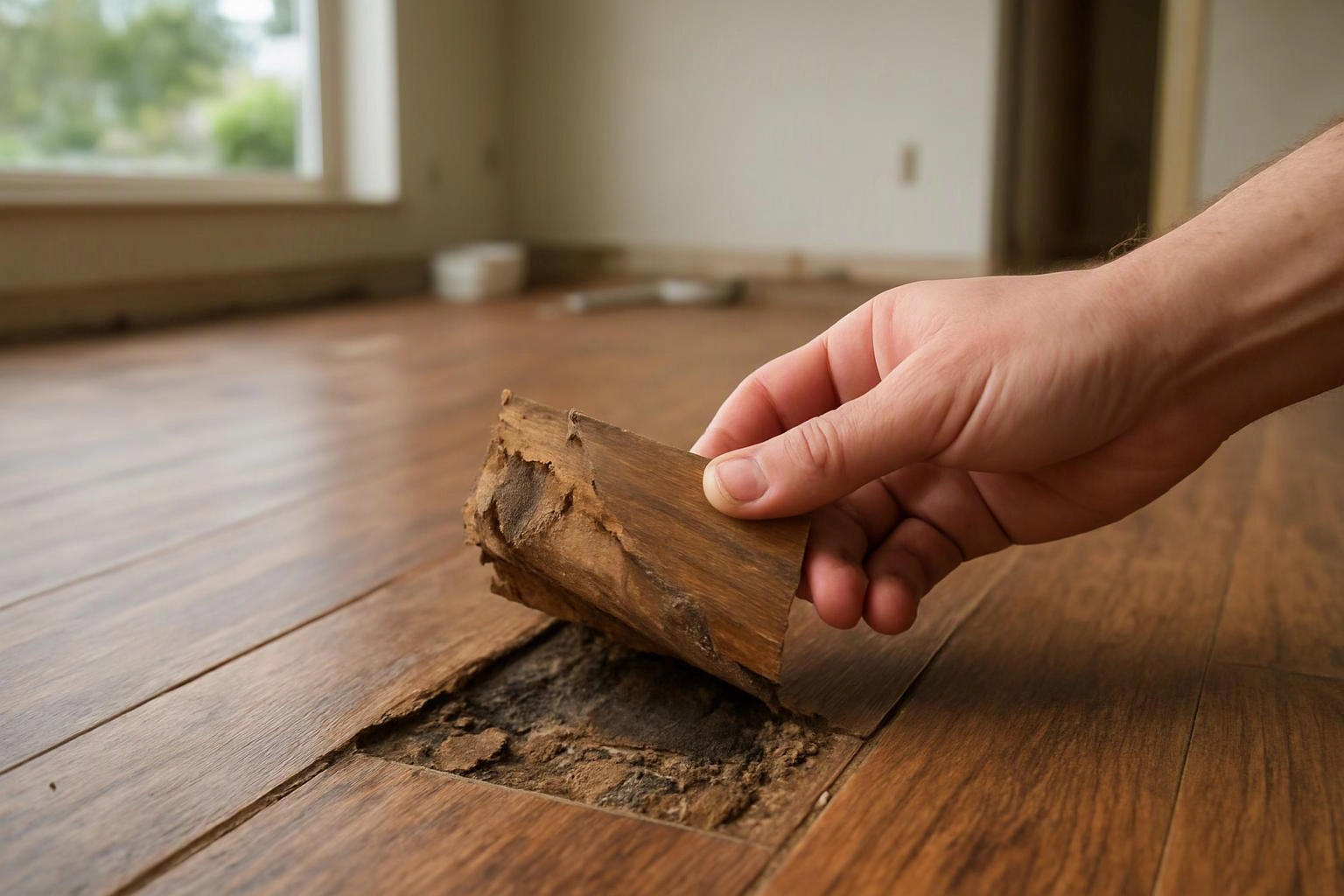
Soft flooring or a spongy floor can indicate subfloor damage, rot, or weak structural support. The surface may feel flexible because the layers below no longer carry normal loads.
Installing new material over that area can hide the defect and lead to movement or early failure. We open the affected area as needed, assess the subfloor, and repair the supporting layers before flooring installation.
Mistake: Covering Damp Flooring Without Finding the Moisture Source
Damp flooring can point to water intrusion, a leak, or moisture moving through the building. Covering the surface does not remove the moisture damage or the mold risk.
Our team traces the moisture source and checks nearby flooring, walls, and subfloor materials. We address the affected layers before installing a dry, stable finish.
Mistake: Installing New Floors Over an Uneven Surface
An uneven floor can prevent new material from sitting flat and can create visible gaps, raised edges, or damaged joints. Floor deflection may also signal movement below the surface.
We check the floor level and identify whether the problem comes from subfloor preparation, framing, or the existing finish. Our repair plan prepares a stable base before the new flooring goes down.
Mistake: Ignoring Cracked or Loose Tiles That Keep Returning
Repeated tile cracks or loose tiles often point to subfloor movement, adhesive failure, or an unstable base. Replacing the tile alone may leave the same movement in place.
We inspect the tile adhesive, underlayment, and subfloor for movement. Tile Installation then follows only after the base can support the finish properly.
Mistake: Replacing Water-Damaged Flooring Without Checking the Edges
Water-damaged flooring can extend under flooring edges, baseboards, and nearby wall materials. Wall moisture may show where water traveled beyond the first visible stain.
We inspect the perimeter and check the subfloor beneath affected edges. This helps us define the repair area and avoid leaving hidden damage beside the replacement floor.
Mistake: Leaving Damaged Subfloor Under a New Finish
Damaged subfloor can make new flooring flex, separate, or lose support. Floor joists may also need review when damage reaches the structural layer.
Our crew checks the subfloor and underlayment before flooring replacement. We complete structural repair when the support system affects the finished floor.
Mistake: Treating Floor Movement as Only a Surface Problem
Floor movement, a squeaky floor, or loose flooring can indicate joist movement or weak structural support. The visible finish may only be showing a deeper problem.
We assess how the floor moves and connect that finding to the framing and subfloor. The repair scope follows the source of movement, not just the noisy or loose section.
Mistake: Demolishing Flooring Before Planning the Repair
Floor demolition without a repair plan can expose hidden damage and create unnecessary debris. It can also remove material that helps explain how the failure began.
We review access, likely damage, debris removal, and the repair scope before demolition services begin. That planning keeps the work focused and supports a clearer installation plan.
Mistake: Choosing New Flooring Before Confirming the Base Is Ready
Flooring material has installation requirements that depend on moisture condition, floor level, and subfloor preparation. A finish chosen too early may not suit the existing base.
We confirm the condition of the floor before recommending material. Our team then matches the installation method to the prepared surface.
What Each Flooring Warning Sign Can Cost You
The cost of damaged flooring depends on the affected layers, the moisture source, the repair area, and the preparation needed before installation. We explain which work the quote includes after checking those conditions.
Surface replacement usually has a smaller repair scope than work involving moisture, subfloor damage, or structural support. Our estimate separates demolition, preparation, repairs, materials, and flooring installation so you can see what the work covers.
| Warning sign | Possible affected layer | Work that may be needed |
|---|---|---|
| Soft or spongy area | Subfloor or structural support | Subfloor inspection and structural repair |
| Damp or stained finish | Moisture source, walls, or subfloor | Moisture assessment and affected-material repair |
| Uneven surface | Floor preparation or framing | Leveling and base preparation |
| Cracked or loose tile | Tile adhesive, underlayment, or subfloor | Movement correction and tile installation |
| Squeaks or floor movement | Joists or structural support | Structural review and repair planning |
To obtain an exact quote, we inspect the floor and explain the repair scope before work begins. The final plan reflects the layers that need access, repair, removal, and replacement.
When Flooring Problems Need More Than Surface Replacement
Flooring problems need more than surface replacement when damage affects the subfloor, moisture control, floor level, or structural support. We connect the visible warning sign to the repair that must happen before new flooring goes down.
Subfloor repair may be needed under wood, vinyl, laminate, or tile. Moisture remediation may need to happen before underlayment and finish materials can be installed.
Our team also checks whether tile installation or another flooring installation method fits the prepared base. Structural repairs take priority when floor joists or support members affect safety and stability.
When to Call HomeRemodelNorthbend.info Before Removing the Floor
Call HomeRemodelNorthbend.info before removal when the floor shows signs that may extend below the finish. Early inspection helps protect the repair scope and supports safer demolition services.
How We Prepare a Damaged Floor for New Installation
Floor preparation starts with a floor inspection that identifies the finish, underlayment, subfloor, moisture condition, and support below. We use those findings to plan demolition services and protect areas that can remain.
Our crew removes damaged materials as needed and checks the exposed base. We repair weak subfloor areas, address moisture concerns, and correct floor level problems before installing the new finish.
For complex conditions, we explain where structural repairs fit into the work. You can review our Flooring Installation service to see how preparation connects with the finished installation.
We also explain the material requirements before ordering or installing flooring. That step helps prevent adhesive failure, movement, and other problems caused by an unsuitable base.
Choose the Repair Before Choosing the New Flooring
Floor preparation should come before choosing the final flooring material. The condition of the subfloor, moisture control, and floor level determines which installation methods can work well.
Our team connects the repair plan with the selected finish, whether the project involves tile installation or another flooring material. We explain the underlayment, base preparation, and moisture requirements before installation begins.
HomeRemodelNorthbend.info can inspect the warning signs, define the repair scope, and prepare the floor for the next step. Contact us to discuss the condition of your damaged flooring and request an exact quote.
Questions About Flooring Warning Signs
Can new flooring be installed over a soft spot?
No, new flooring shouldn't cover a soft spot until the cause is checked and repaired. HomeRemodelNorthbend.info assesses the subfloor and structural support before recommending installation.
Why do floor tiles keep cracking after replacement?
Floor tiles can keep cracking when subfloor movement, uneven preparation, or adhesive failure remains below them. We inspect the tile base and correct the movement before tile installation.
What should be checked before replacing water-damaged flooring?
Water-damaged flooring needs a check of the moisture source, flooring edges, baseboards, wall moisture, underlayment, and subfloor. We use those findings to define the affected area and repair scope.
Can flooring be installed over an uneven subfloor?
No, flooring shouldn't be installed over an uneven subfloor until the floor level and base preparation meet the material's requirements. We correct the preparation issues before installing the new finish.